
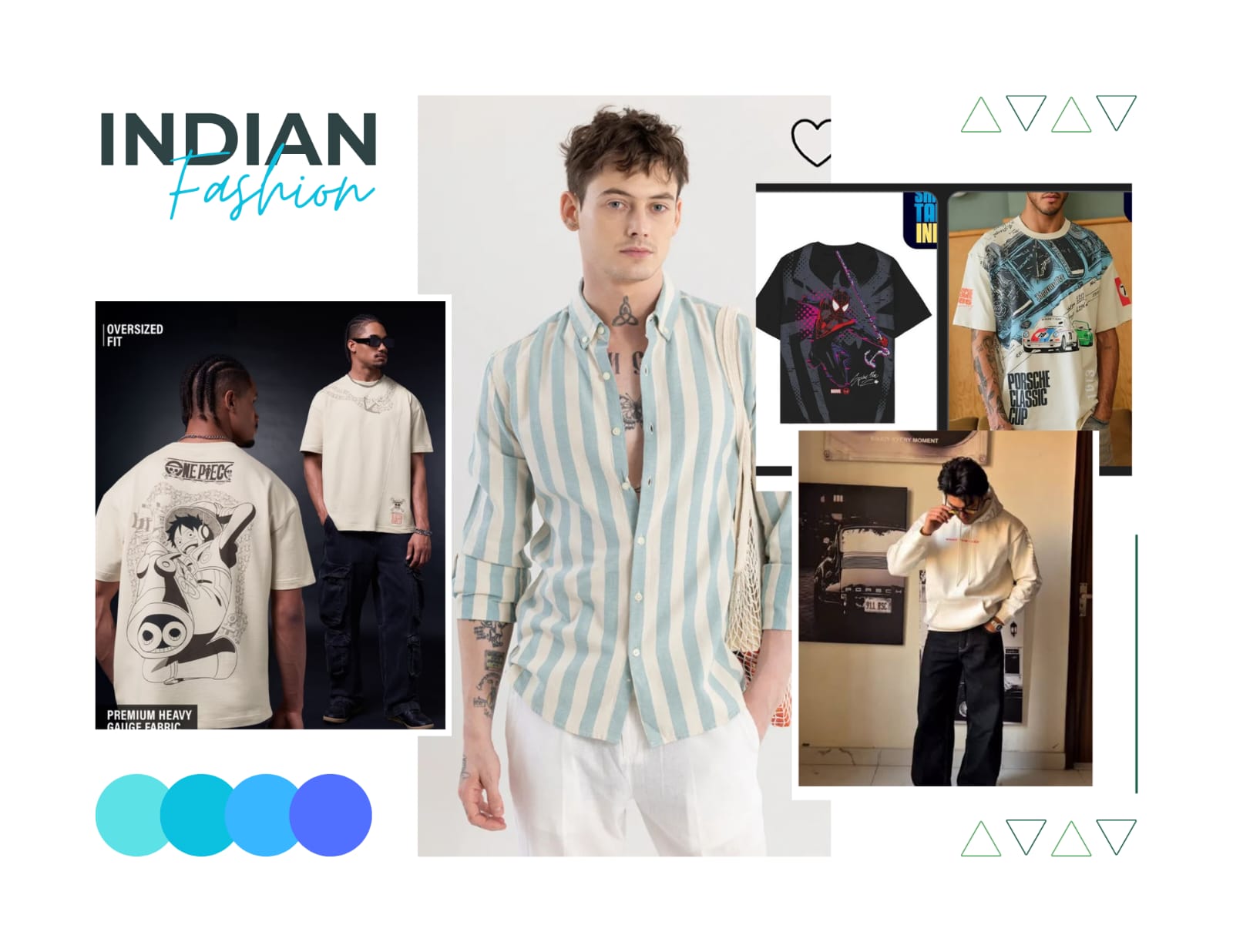
Streetwear didn’t just land in India — it grew out of it. Out of cramped lanes, college corridors, underground rap battles, and Instagram feeds that refused to look like anyone else’s. What started as a counter-culture whisper is now the loudest thing happening in Indian fashion — and the brands leading the charge are all youth-led, community-first, and unapologetically desi.
This is the story of how Indian streetwear went from zero to a full-blown movement, what’s actually driving it, and why the most exciting chapter is still being written. At hemsnhues, we’re front-row for all of it — and we want you to be too.
Wait, What Even Is ‘Indian Streetwear’?
Let’s set the record straight because this term gets thrown around loosely. Streetwear globally started as workwear and sportswear that got adopted by skaters, hip-hop heads, and kids who didn’t see themselves in mainstream fashion. It was always about identity over aesthetics — what you wore was a signal of who you were and what you stood for.
Indian streetwear takes that same DNA and runs it through a desi filter. It’s oversized silhouettes inspired by the lanes of Mumbai. It’s graphics that nod to Bollywood scenes, cricket legends, and local slang. It’s colour palettes that look like a Holi celebration and cuts that feel as comfortable as a Sunday in your mohalla.
Indian streetwear isn’t aping the West. It’s rewriting the brief entirely — and the result is something that couldn’t exist anywhere else on the planet.
The 5 Forces Actually Driving This Movement
Nothing this big happens for one reason. Here’s what’s genuinely fuelling the rise of Indian streetwear:
1. The Gully Rap Explosion
You can’t talk about Indian streetwear without talking about gully rap. When Divine, Naezy, and the entire Mumbai hip-hop scene blew up — especially post-Gully Boy — they didn’t just change music. They changed how a generation dressed. Suddenly the aesthetic of the streets was aspirational, and brands that reflected that world found an audience overnight.
If you want to understand how deep the cultural connection runs, this breakdown of Indian hip-hop’s fashion influence by Rolling Stone India is worth your time.
2. Social Media as the New High Street
India now has over 500 million Instagram users — the largest base in the world. For a generation that discovered everything from music to politics on their phones, it makes complete sense that they’d discover fashion the same way. Youth-led brands that understood Instagram-first marketing didn’t need retail stores or ad budgets to build audiences. They needed a point of view and consistency.
Follow @hems.n.hues to stay updated with the best in Indian youth-led fashion — we drop brand stories, style content, and community highlights regularly.
3. The Post-COVID Identity Shift
Lockdown did something unexpected: it made people think hard about what they actually wanted to wear versus what they felt they were supposed to wear. When offices disappeared and dress codes dissolved, comfort and self-expression won. Indian youth came out of the pandemic with a clearer sense of personal style — and a lower tolerance for fashion that didn’t feel like them.
Youth-led streetwear brands were perfectly positioned for this moment. They’d always been about authenticity over aspiration.
4. Pride in Desi References
Something huge shifted culturally in the last five years: being Indian became cool again — on Indian terms, not filtered through a Western lens. Gen Z consumers are actively seeking brands that reference their actual world. Local slang on a hoodie. A graphic that quotes a cult Bollywood dialogue. A colourway that looks like a Tamil Nadu temple wall.
This isn’t nostalgia. It’s reclamation — and streetwear is the perfect canvas for it.
5. Affordable Quality Is Finally Here
For years, the gap between ‘looks good’ and ‘affordable’ was the biggest barrier for Indian fashion consumers. Either you bought cheap and it showed, or you spent on international brands and felt disconnected. Youth-led brands cracked this — quality fabrics, thoughtful design, and price points that don’t require a second thought. That combination unlocked mass adoption.
🔥 Explore the brands defining Indian streetwear — all in one place at hemsnhues.com
The Brands Actually Writing This Story
Theory is great. But the real proof is in the brands. At hemsnhues, we’ve curated the six youth-led Indian fashion brands that are doing the most interesting work right now. Here’s what makes each one part of the movement:
- Off Duty India — The philosophy here is simple: dress for your actual life, not a fantasy version of it. Off Duty’s relaxed silhouettes and considered basics are built for the in-between hours — post-college, pre-plans, just existing. It’s comfort that doesn’t sacrifice identity.
- Gullylabs — This brand IS the streets. Drawing directly from India’s gully culture and the urban underground, Gullylabs makes pieces that feel like they were designed by the same kids who are wearing them. The graphics are references, not decoration.
- The Souled Store — They proved that fan merchandise could be fashion. By taking India’s pop culture obsessions — cricket, Bollywood, anime, gaming — and putting them on quality blanks with real design, they built a category that didn’t fully exist before. Check out their full range on The Souled Store’s website.
- Snitch — Fast but not thoughtless. Snitch cracked the code on trend-responsive menswear that actually fits Indian body types and budgets. Their drop model and deep social presence means they stay culturally relevant in a way bigger brands struggle to match. Explore their collections at co.in.
- What The Flex — If streetwear is about self-expression, What The Flex turns that dial to maximum. Loud prints, bold slogans, maximalist energy — this brand is for the ones who want their outfit to start the conversation before they say a word.
- Bewakoof — The OG of Indian online-first youth fashion. Bewakoof figured out the relatable + affordable + digital formula before it became the playbook, and they’ve stayed relevant by levelling up their design game while keeping the accessibility that made them a household name. More at com.
What connects all six? They’re all community-built, culturally rooted, and run by people who are essentially their own target audience. That’s not a coincidence — it’s the whole point.
By the Numbers: Why This Isn’t Just a Vibe
For the data-heads and the sceptics — here’s why Indian streetwear is a structural shift, not a trend:
- India’s fashion e-commerce market is projected to hit $35 billion by 2028, with youth-driven segments growing fastest. (Statista)
- Over 65% of India’s population is under 35 — the largest young consumer base anywhere in the world.
- Indian Gen Z ranks authenticity and cultural relevance as top purchase drivers — above brand prestige or price alone.
- Homegrown brands are gaining ground on international fast fashion, particularly in the 18–28 age bracket in Tier 1 and Tier 2 cities.
- The Indian streetwear resale market is growing, signalling that hype culture is establishing roots in India the same way it did in the US and UK a decade ago.
This is a generation with disposable income, strong cultural confidence, and a smartphone in hand. They’re not waiting for fashion to come to them. They’re building it themselves.
What’s Next: The Trends Worth Watching
The movement isn’t plateauing — it’s evolving. Here’s what we’re seeing come next:
Regional Aesthetics Going National
The next wave of Indian streetwear will look past the metros. Chennai, Kolkata, Jaipur, Chandigarh — each of these cities has its own street culture, its own visual language, its own references. Brands that tap regional identities without flattening them are going to build incredibly loyal local-first audiences that scale nationally.
Sustainability Without the Lecture
Gen Z is sceptical of brands that perform sustainability without delivering it. The youth-led brands winning this conversation are the ones baking it into their supply chain quietly — recycled fabrics, limited drops, transparent sourcing — rather than shouting about it in their bio. Expect this to become table stakes, not a USP.
Collabs Over Campaigns
The best marketing in Indian streetwear right now isn’t ads — it’s collabs. Brand x artist, brand x local musician, brand x neighbourhood institution. These partnerships generate organic reach and cultural credibility that no paid campaign can replicate.
The Rise of Indian Streetwear Women
Historically, streetwear in India skewed heavily male. That’s changing fast. Women-led brands and female-focused drops are growing rapidly, and the aesthetic is distinctly Indian — not just the female version of what the guys are wearing. This is one of the most exciting spaces to watch.
📲 Stay plugged into the movement — follow @hems.n.hues on Instagram and visit hemsnhues.com for the latest from India’s best youth-led fashion brands.
Why hemsnhues Exists in This Moment
We’re not a trend aggregator or a shopping directory. hemsnhues is a platform built on a belief: that India’s youth-led fashion brands have stories worth telling, and that those stories deserve a stage.
Our first blog explored the theme of Youth as Nation Builders — the idea that young people building brands, communities, and culture are contributing something real to the country. This blog is about the movement that belief belongs to.
Every brand we platform was chosen because they’re building something with intention. They have a why. They have a who. And they have a what that you won’t find anywhere else.
As this movement grows — as more young designers get the confidence to start, as more consumers choose homegrown over imported, as the cultural conversation continues to shift — hemsnhues will be here to document, celebrate, and amplify it.
The Bottom Line
Indian streetwear didn’t happen to India’s youth. India’s youth built it — out of their own communities, references, and ambitions. The brands doing the most interesting work right now are the ones who started with a story and built outwards from there.
Off Duty India, Gullylabs, The Souled Store, Snitch, What The Flex, and Bewakoof are six different answers to the same question: what does fashion look like when India’s youth build it for themselves?
The answer, as it turns out, looks really good.
Explore all of them at hemsnhues.com — and follow us at @hems.n.hues to stay in the loop.
Tags: Indian Streetwear, Youth Fashion India, Gen Z Fashion, Gully Culture, Homegrown Brands, hemsnhues

Leave A Comment